Replacement glass units only: supply for your own fitter
Some people want the glass and nothing else: a builder already on site, a landlord with a regular contractor, a competent homeowner with a set of trim knives. This is how to buy sealed units that way without getting a size or a make-up wrong.
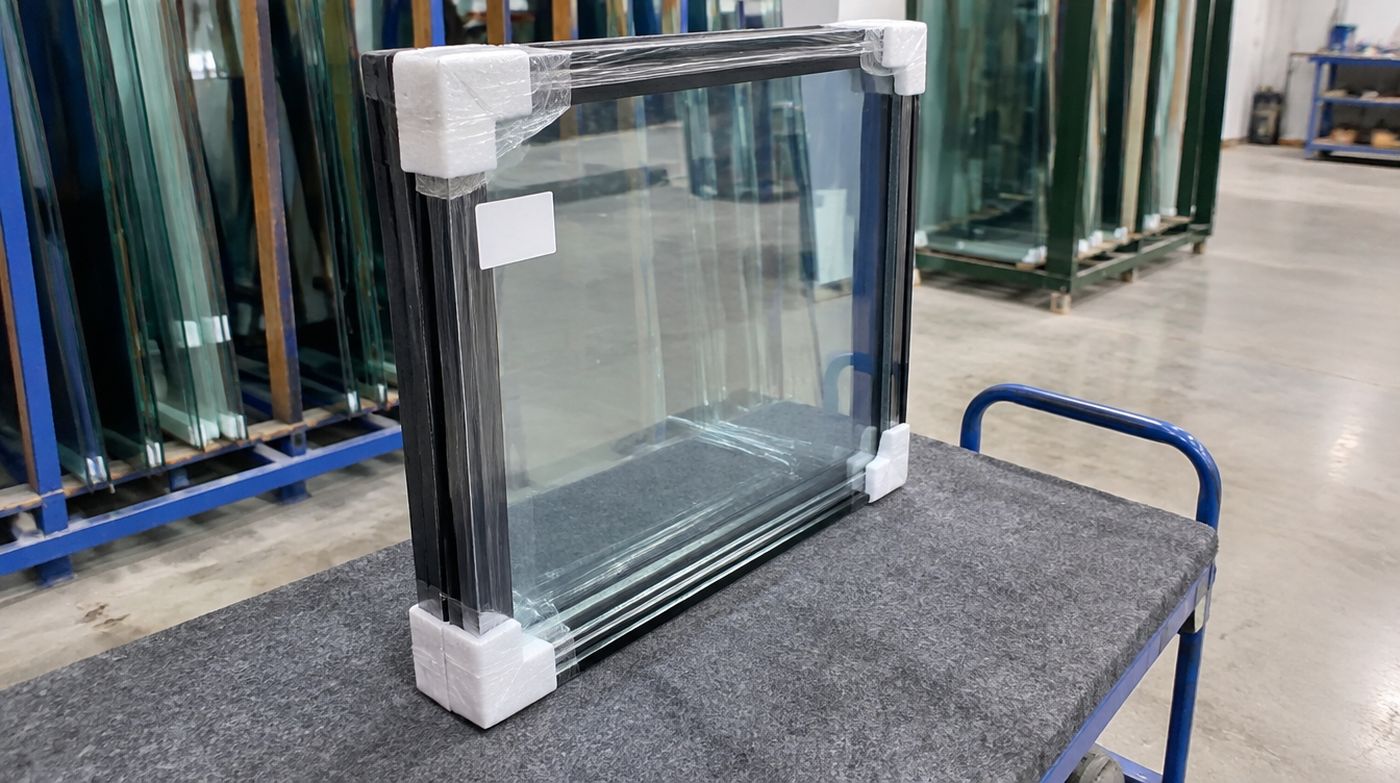
Who should buy replacement glass units only
Replacement glass units only means exactly that. We make the sealed units in our Wembley workshop to the sizes you give us, and you or your own fitter put them in. No survey, no fitting, no second visit from us. It is cheaper than supply and fit because on a small glazing job the labour and the two visits are most of the bill.
It suits a builder already on site who will have the beads off anyway, a landlord or letting agent whose maintenance contractor glazes, and a competent homeowner with accessible windows. Trade customers are covered by our trade supply rather than by this page.
Measuring a sealed unit yourself without getting it wrong
Almost every problem with a glass-only order is a measuring problem, and all of them are avoidable. There are two numbers you can measure on a window, and only one of them is the unit size.
Sight size is not unit size
The sight size is the glass you can see, bounded by the beads or the putty line. The unit itself is bigger, because its edges are hidden in the rebate behind those beads. Measure the glass you can see, order that, and you will take delivery of a unit that falls straight through the frame.
Measure the rebate, then deduct
The right measurement is the opening in the frame itself, beads removed, rebate edge to rebate edge, in millimetres. Take it in three places across and three up and use the smallest of each, because frames are not square. A clearance is then deducted so the unit can be packed rather than forced. That is a few millimetres off each dimension on a typical PVCu or timber rebate, but it depends on the system, so send your raw opening sizes with the finished size you think you want and we will confirm it. Do not guess. A unit cut dead to the opening cannot be packed and will fail early; one cut too small rattles and cannot be beaded.
Check the diagonals
Measure both diagonals of the opening. More than a few millimetres of difference means the frame is out of square, and on a tight opening that difference eats all of your clearance at one corner. Tell us, because we can take a unit down slightly rather than have you fighting it in on the day with the old glass already out.
Bays, doors and anything shaped
Bay windows, arched heads, raked tops and leaded panels need a template or a card pattern, not three numbers. Shaped work ordered from a description goes wrong often enough that we will usually ask to measure it ourselves.
If that feels like more than you want to take on, say so. Our survey is free across London and it removes the whole category of risk described further down this page.
Working out the thickness and the make-up
Overall thickness is the second number that matters, and the frame sets it, not preference. The rebate has a fixed depth and the bead a fixed throat, so a 28mm unit does not go into a frame built for 20mm, however much better it would perform.
Measure the old unit edge-on with a vernier or steel rule once the bead is off. Common thicknesses in London housing are 20mm, 24mm and 28mm. The make-up is the arrangement within that: a 24mm unit is usually 4mm glass, a 16mm cavity and 4mm glass, and a 28mm is typically 4 - 20 - 4. Thicker glass, for acoustic reasons or because the pane is large, means the cavity shrinks to hold the same overall thickness. That trades a little thermal performance for noise reduction, and it is your decision rather than the cutter’s.
A modern warm-edge spacer in composite or stainless conducts far less heat than the old aluminium box section, which is what reduces condensation along the bottom of the pane in winter. It costs very little more and is one of the few genuine upgrades in a sealed unit. Low-emissivity glass and a gas fill are not upgrades: they are roughly what replacement glazing is expected to be under Approved Document L, and nobody should charge you for them as extras.
Where not to spend: triple glazing in a frame built for a 24mm unit, which will not fit whatever anyone says; solar control glass on a north elevation, which has no solar gain to control and costs you daylight you want in London; and acoustic laminate in a back bedroom over a garden when the window that actually needs it faces the road.
How to tell whether the old glass was toughened or laminated
This is the part of a glass-only order where being wrong has safety and legal consequences rather than just cost.
Toughened glass carries a permanent sand-blasted or etched stamp in one corner, usually naming the processor and BS EN 12150. Check all four corners of both panes with the light at an angle. A stamp means that pane is toughened and the replacement must be too. Laminated glass shows a fine line of interlayer at the exposed edge once the bead is off, and is marked to BS EN 14449.
An unmarked pane is not proof the location does not need safety glass. It is just as likely proof that whoever glazed it originally got it wrong. Approved Document K treats glazing in doors, in side panels beside doors, and below 800mm from floor level in a window as critical locations, and glass there has to be safety glass to BS 6206 Class A. Where glass forms or sits in front of a barrier, BS 6180 loading applies as well.
So tell us what the opening is and where it sits, not just how big it is. If you order a 600 by 1,400 unit and it turns out to be the panel beside a front door, we will make it toughened, and we will not quote plain glass for it even if that is what is in there now. This is the one point where we will overrule a customer.
What we need from you before we cut anything
To make replacement glass units only, we need the following for each unit. Once you have it, the order takes a phone call.
- Width and height in millimetres as the finished unit size you want, plus the raw opening sizes you measured and the deduction you applied.
- Overall thickness, and the make-up if you know it, for example 24mm as 4 - 16 - 4.
- Where the unit goes: the room, and whether it is a window, a door, a side panel beside a door, or glazing starting below 800mm from the floor.
- Glass type: clear, which obscure pattern, toughened, laminated, acoustic or solar control, and whether there is a Georgian bar or leaded design to match.
- The diagonals if the opening is out of square, and which way round the unit sits if it is anything other than a standard vertical window.
For obscure glass, bring a piece or send a clear photograph against a plain background. Patterns look alike in a brochure and quite different in a bathroom door, so we match yours against samples at the workshop. Some older patterns are discontinued, and we will say when the closest match is not an exact one.
Who carries the risk when the measurement is yours
This is the trade-off at the centre of buying glass only, and it should be said plainly rather than buried in small print.
On a supply and fit job we measure, so a unit that does not fit is our problem and we remake it. On a glass-only order you measure, so a unit made correctly to your figures that does not fit is a remake you pay for. Sealed units are cut and assembled to order and cannot be altered or resold, which is why nobody in the trade takes them back.
That is the saving, honestly described: the lower price is you carrying the measuring risk. For one straightforward bedroom window that is a reasonable bet. For eight units across a house, where one mistake wipes out the saving on all of them, it usually is not.
There is a middle route people overlook. We can survey and measure for a fee, give you the finished sizes in writing, and still supply glass only for your own fitter to install. You keep the labour saving and we keep the measuring risk. If you have more than a couple of units, ask about that instead of assuming the choice is all or nothing.
Fitting a sealed unit: the parts people get wrong
If you are fitting it yourself, the glass goes in dry, on blocks, in a rebate that still drains. Those three things cover most of what goes wrong.
Setting blocks carry the weight. The unit sits on blocks near the bottom corners, not on the frame and not on the bead, with the load through the edges of both panes together and never one pane alone. On an opening sash there are blocks at the top too, so the sash cannot rack and load the glass diagonally. It also needs clearance and side packers so it cannot shift, with nothing jammed into a corner: a unit forced into an opening is under permanent stress, and stress at the edge is what breaks seals.
The rebate has to drain when you have finished. On a drained system, do not bed the unit in silicone or run sealant round inside the rebate. Water that gets in must get out through the drainage slots, and blocking them is the commonest reason a replacement fails within a few years. Reuse gaskets only if they are still soft.
Beads go back in the order they came out, longest first on most systems, and should click home without persuasion. If a bead needs force, something under it is not seated. Carry the unit on edge with both panes supported, because taking a large unit flat by one pane twists the seal before it is even in the window.
When buying glass only is the wrong decision
We will talk you out of a glass-only order in a few situations, and they are worth knowing before you phone.
Anything above the first floor that cannot be glazed from inside needs access equipment and two people, and that is not a job to improvise off a ladder. Large units are far heavier than people expect. Units in doors are worth having fitted, because the margin for error is smaller and a mistake leaves a door you cannot lock overnight. Frames with obsolete beads should be assessed in person: if a bead snaps and no replacement exists, the window cannot be put back together.
And if the window’s problem is not the glass, buying glass solves nothing. Rotten bottom rails, dropped sashes and blocked drainage need dealing with first, and we would rather say so on the phone than take an order for a unit that will fail early in a frame never ready for it.
The workshop is at 6 Atlas Road, Wembley HA9 0JH, Monday to Friday 8am to 5pm, on 020 4634 6045. Units can be collected or delivered across London. Send your sizes over and we will check the deductions before anything is cut, because a five-minute conversation is cheaper than a remake for both of us.
FAQ
Questions about replacement glass units only
Can I buy just the glass unit and fit it myself?
Yes, if the window suits it. We make sealed units to the sizes you supply, and you collect from Wembley or take a delivery and fit them yourself. The practical conditions are that you can reach the window safely from inside, the unit is a size one or two people can handle, the glazing beads are a type still available in case one breaks, and you are comfortable with setting blocks, packers and keeping the rebate draining. Because the sizes are yours, a unit that does not fit is a remake at your cost, so measure everything twice and send us the opening sizes as well.
How do I measure a double glazed unit for replacement?
Take the beads off and measure the opening in the frame itself, rebate edge to rebate edge, in millimetres, in three places across and three up, then use the smallest figure each way. Measure both diagonals too, so you know whether the frame is square. A clearance is then deducted so the unit can be packed rather than forced, and the right deduction depends on the window system, so send us the raw opening sizes with your intended finished size and we will confirm it before cutting. While the bead is off, measure the exposed edge of the old unit for overall thickness.
Will you deliver sealed units or do I have to collect?
Either. The workshop is at 6 Atlas Road, Wembley HA9 0JH, and collection is usually quickest if you are nearby and have a vehicle that will take glass upright with both panes supported. We also deliver across London. Units should always travel on edge, never flat and never resting on one pane, because carrying a unit on a single face twists the seal and can start a failure before it is even fitted. If you are collecting, bring something to stand the glass in and some protection for the edges, and tell us at the point of order so we pack it accordingly.
Get a price for your replacement units
Tell us roughly how many windows have misted and we will give you a price. Several units on one visit works out cheaper per window.