Misted & blown unit replacement
The common job: one or two failed units in an otherwise sound window. We measure, make the unit and come back to fit it.
- Glass only — frames stay
- Any window material
- Usually a week turnaround
Glass only · keep your frames
When a double glazed unit mists up, the seal has failed — not the frame. We make replacement sealed units to measure in our own Wembley workshop and fit the glass only, at a fraction of the cost of new windows.
No forms. Call the workshop, or email and we will come back the same working day.

What we do
If you can see condensation or a milky haze between the panes, the unit has failed and no amount of cleaning will touch it — the moisture is sealed inside. Here is what that normally involves.
The common job: one or two failed units in an otherwise sound window. We measure, make the unit and come back to fit it.
Standard 20mm, 24mm and 28mm units with low-e glass and warm-edge spacers, made to your measured sizes.
Required by Part K in doors, side panels and low-level glazing. We identify where toughened glass is a legal requirement, not an upgrade.
Pattern-matched obscure glass for bathrooms, and units with leaded or Georgian bars to match the rest of the house.
If a window faces a main road or bakes in the afternoon sun, replacing a failed unit is the moment to fix that too.
Cut, made and collected or delivered for builders, glaziers and window companies. Trade pricing on request.
The work
Illustrative images of the systems described above. Specification and finish are confirmed in writing with your quotation.
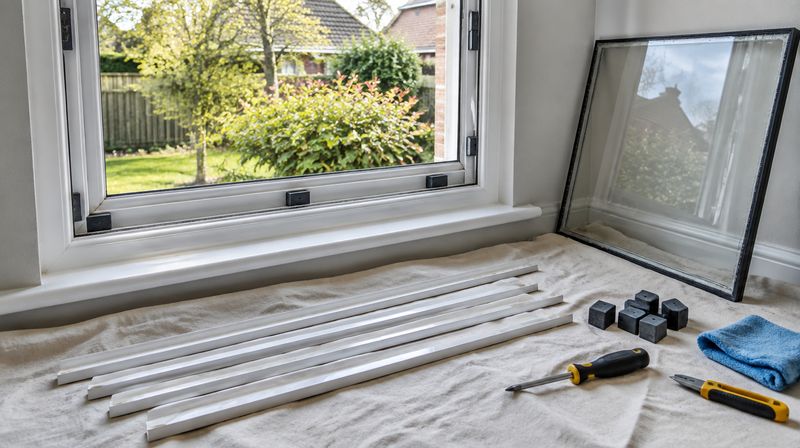
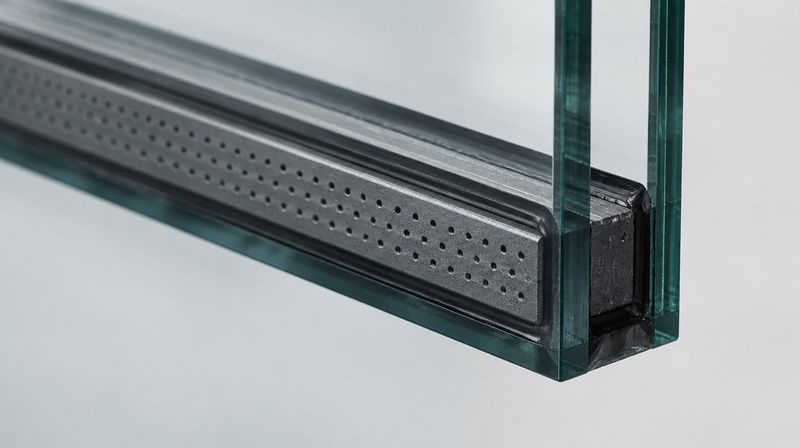
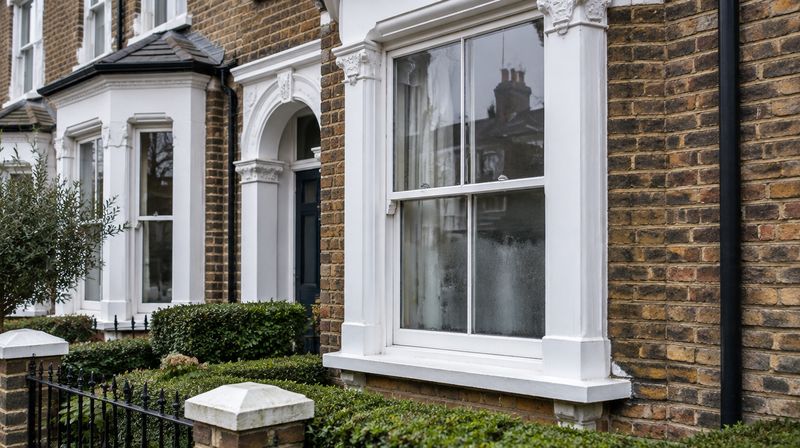
The glass in a double glazed window is a separate component from the frame it sits in. Two panes, a spacer bar around the edge holding them apart, a cavity filled with air or argon, and a seal around the perimeter. That assembly is a sealed unit, and replacement sealed units are what you need when double glazing mists up. Not new windows. We make ours in our own workshop on Atlas Road in Wembley and fit them into the frames already in your house. If your frames still open, close and lock properly, that is the whole job.
Most people get quoted for the wrong thing because they ask the wrong company. A firm that sells windows earns nothing from telling you the frame is fine. We cut and process glass for a living, so we have no reason to oversell. Sealed unit replacement is cheaper, quicker and far less disruptive than window replacement, and on the large majority of misted windows we are called to across London it is also the correct technical answer.
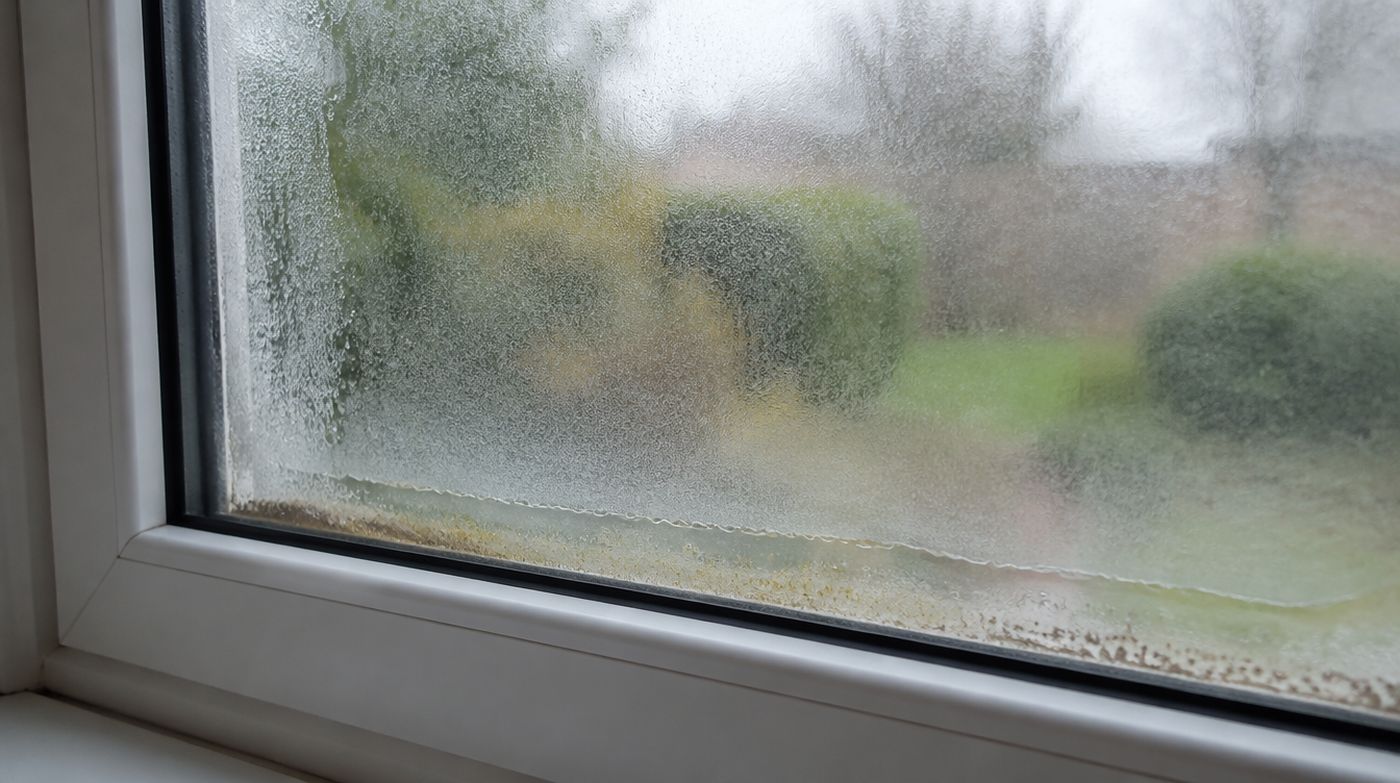
Before you spend anything, work out which condensation you actually have. There are three. They have nothing to do with each other, and only one of them is a window fault.
Water on the room side of the glass, the face you can reach and wipe, is a humidity problem rather than a glass problem. Warm moist air meets the coldest surface in the room and gives up its moisture there, and the glass is simply the coldest surface available. That tells you two things. The house is making more water vapour than it is losing, usually from showers, cooking, drying washing indoors or a tumble dryer that is not vented outside. And the glass is cold enough to be the condensing surface, which almost always means an older unit of two plain clear panes with no coating. Fitting a low emissivity argon unit raises the inner pane temperature and will reduce the condensation between glass panes you see every morning, but it will not cure a ventilation problem on its own. Anyone who tells you new glass stops all condensation is selling, not advising.
Water on the outside face, usually on a still clear morning in autumn, is the one that makes people ring up convinced something has failed. It is the opposite of a fault. The outer pane has radiated its heat away to a clear sky and dropped below the dew point of the outside air, and that only happens when so little heat is escaping through the glass that the outer pane is not being warmed from behind. It is most common on good modern units, on elevations with an open view of sky and no eaves or overhang above them, and it burns off by mid morning. There is nothing to fix and nothing to buy.
Water inside the cavity, between the two panes, is the fault. You cannot wipe it off either face. Hold a low winter sun behind it, or look early on a cold morning, and you will see haze, droplets, or a tide line where water has been standing. Early failures are intermittent: misty first thing, clear by lunchtime, back the next cold morning. That is a desiccant which has taken up about as much moisture as it can hold and is now giving some of it back as the unit warms through the day. Later failures stay misted permanently, and the worst show grey or white mineral staining and streaks that no longer move at all. That staining is etched into the glass surface. By that point you have lost not only the look of the window but some of the light coming through it.
Blown double glazing units fail by fatigue, not by bad luck. Every day the air or gas in the cavity expands in the sun and contracts overnight, and the edge seal flexes with it, thousands of times a year. The elevations that cycle hardest fail first. In London that means south and south west facing glass, glass in doors that get slammed, glass in frames where the drainage slots have silted up so the bottom edge of the unit stands in water, and glass behind blinds that are kept closed in direct sun where cavity temperatures climb hard. North and east facing windows of exactly the same age often carry on for years longer.
This is useful, because one failure predicts the rest. If a south facing bay fitted in the 1990s has gone, the other units on that elevation are the same age, the same make-up and on the same clock. The back of the house may be nowhere near the end of its life. Work out which units share an elevation, an age and a manufacturer, and you can plan the spend instead of reacting to it one window at a time.
Look closely at the edge of the glass, behind the beading, and you can date a unit without any paperwork at all. A bright polished aluminium spacer with a visibly perforated inner face, holding loose desiccant beads, points to the late 1980s and the 1990s. Aluminium conducts heat straight across the edge of the unit, which is why old units often show a band of condensation around the border long before the middle of the glass goes. A mid grey, bronze or black composite or thin stainless strip, usually described as a warm edge spacer, is later work. Any date stamp, batch number or standard reference printed on the spacer is worth photographing before the unit comes out, because it tells us what the original make-up was and what the frame was designed around.
Every made to measure sealed unit carries three costs: a survey visit, a cutting and assembly run in the workshop, and a fitting visit. Do one unit and it carries all three on its own. Do six and the survey, the loading, the travel and the parking are shared across them. The glass itself does not get dramatically cheaper per square metre at domestic quantities, so treat a large volume discount on the glass with suspicion, but the cost around the glass drops sharply. That is the honest version of why doing a whole elevation together is better value than doing one window a year for six years.
If one unit has failed and the rest of that elevation is the same age, we will measure the lot and price them as separate lines so you can decide what to do and when. We will not tell you they all need doing today, because they do not.
If a quotation for replacement sealed units cannot tell you the glass make-up in millimetres, the person who priced it has not measured the rebate depth, which means they are guessing at the one dimension that decides whether the unit fits at all. Ask again before you pay a deposit.
How it works
Four stages, and we tell you where you are at each one.
We measure the glass, not the window, and check the thickness, the spacer and whether toughened glass is required in that position.
A written price per unit including fitting and taking the old glass away. Several units at once brings the per-unit cost down.
Your units are made in Wembley. A plain unit is usually ready in a few days; patterned or toughened glass takes a little longer.
We take out the beads, swap the glass, re-bead and seal, and remove the failed units. Around 20–30 minutes per window.
Specification
Every quote states the glass build, the standards it is made to and the hardware. If a quote you are comparing does not, that is worth asking about.
Your units are made up on Atlas Road in Wembley, a short drive from most of the homes we glaze.
| Item | Specification |
|---|---|
| Unit thicknesses | Commonly 20mm, 24mm and 28mm overall. We measure the existing unit because the frame rebate dictates what will fit — a thicker unit will not bead in. |
| Glass build | Standard build is 4mm low-e soft coat / spacer / 4mm clear float, argon filled. Toughened, laminated, acoustic and solar control builds are all available. |
| Spacer bars | Warm edge composite spacers as standard, which reduce cold-bridging at the glass edge and cut the condensation that gathers along the bottom of a pane. |
| Safety glass | Toughened glass to BS 6206 Class A is required in doors, side panels within 300mm of a door, and glazing below 800mm from floor level (1500mm in doors and side panels). |
| Thermal performance | A modern low-e argon-filled unit achieves a centre-pane U-value of around 1.2 W/m²K, against roughly 3.0 for the clear-glass units fitted in the 1980s and 90s. |
| Guarantee | Units are supplied with a manufacturer's guarantee against seal failure. Terms are confirmed in writing with your quotation. |
FAQ
A sealed unit is two panes bonded to a spacer bar with a desiccant inside to absorb the small amount of trapped moisture. When the perimeter seal fails, outside air gets in, the desiccant saturates, and moisture then condenses on the inner faces of the glass where you cannot reach it. That is what the haze and the water droplets are. The glass is sound and the frame is usually fine — the seal has gone.
No. Drilling and 'de-misting' a unit is sometimes offered and we would not recommend it: the cavity is vented to the outside air, so the window stays permanently open to moisture, the coating and desiccant are already compromised, and the thermal performance does not come back. The unit has to be replaced. The good news is you only replace the glass.
It depends on size, glass build and whether toughened or patterned glass is needed, but it is a small fraction of replacing the window. Replacing several units on the same visit is cheaper per unit than calling someone out for one, because most of the cost of a single unit is the visit. We quote in writing per unit, fitting and disposal included.
Only if the frames are the problem. If a uPVC frame is distorted, the hinges are shot or a timber frame is rotten, new windows make sense. If the frame is sound and only the glass has misted — which is the usual case — replacing the unit is the right repair, and anyone telling you a misted pane means a new window is selling you a window.
Measuring takes a few minutes. Plain units are usually ready within a few days, patterned and toughened a little longer, and fitting takes roughly 20 to 30 minutes per window. Most jobs are finished within a week of the first visit.
Usually, yes. Obscure patterns like Stippolyte, Cotswold and Satin are still in production and we keep the common ones. Leaded and Georgian bar units can be made to match the adjacent windows. Older discontinued patterns are the exception — we bring samples to compare rather than guess from a photograph.
In detail
A page on each part of what we do, written to answer the question properly rather than to sell.
Condensation between the panes means the seal has failed. We replace the glass and leave your frames alone.
One window has misted and somebody has quoted you for four new ones. Before you spend that money, here is how to work out whether the frame you already own is worth keeping.
Blown, misted, gone, steamed up. They all describe one event, and none of them are the frame’s fault. This is what happens inside a sealed unit when it goes, and what each stage looks like from your side of the glass.
There is a real industry selling foggy window repair, and most of what it sells does not work. This page separates the glass, which cannot be repaired, from the window around it, which very often can.
You have spotted mist inside the glass where no cloth will reach it. Before anybody quotes you, there are three checks worth doing yourself and some weather behaviour worth understanding.
Some people want the glass and nothing else: a builder already on site, a landlord with a regular contractor, a competent homeowner with a set of trim knives. This is how to buy sealed units that way without getting a size or a make-up wrong.
There are real ways to spend less on replacing a failed unit, and there are quotes that are low because something has been left out of them. This page is about telling the two apart, including the specification we think you can safely drop.
Coverage
We cover Greater London from our Wembley workshop, with most work in north, west and central London. See the full list of areas.
Tell us roughly how many windows have misted and we will give you a price. Several units on one visit works out cheaper per window.