Foggy window repair: what is actually repairable
There is a real industry selling foggy window repair, and most of what it sells does not work. This page separates the glass, which cannot be repaired, from the window around it, which very often can.
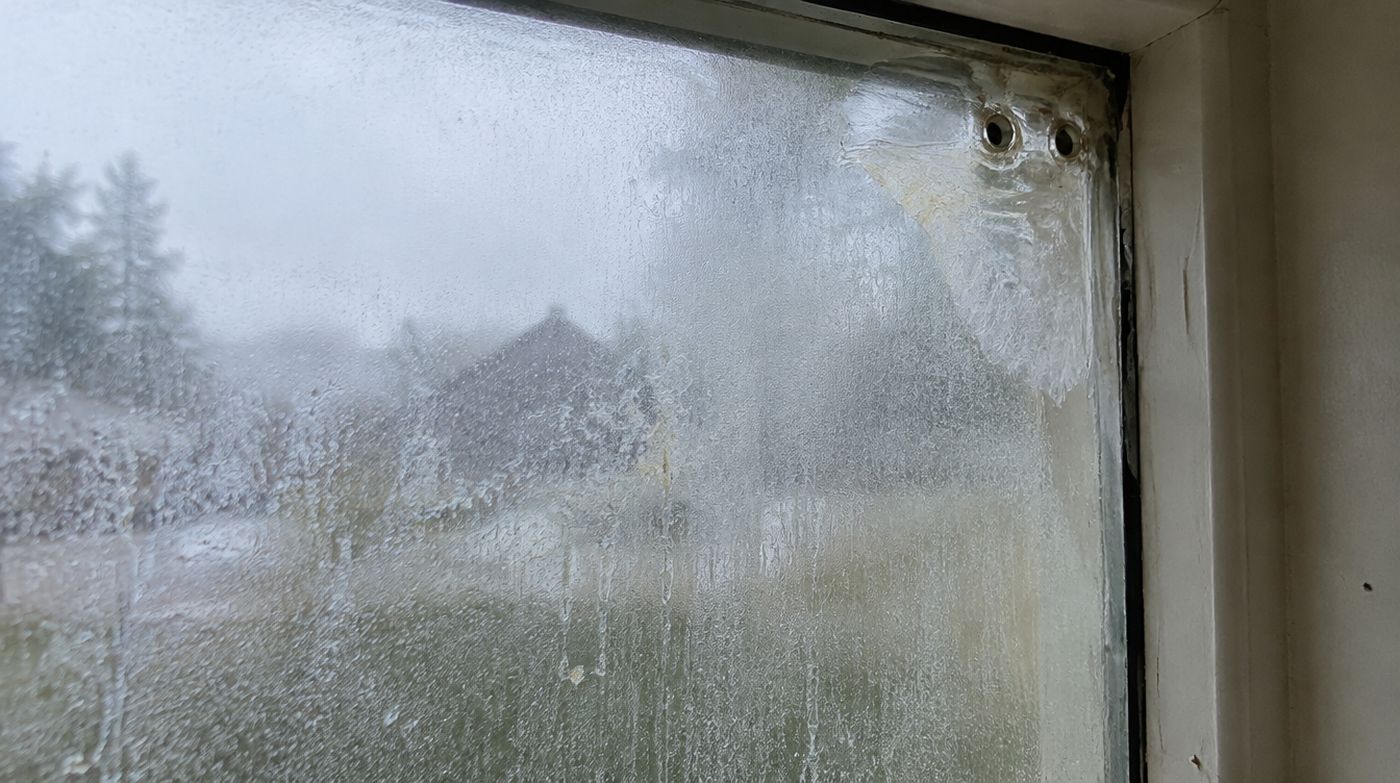
What foggy window repair can and cannot fix
Foggy window repair covers two completely different jobs, and most of the confusion and nearly all of the wasted money comes from mixing them up. One job is restoring a sealed unit whose edge seal has failed. That cannot be done. The other is repairing the window around the glass: the gaskets, the drainage, the hardware, the sash alignment and the frame itself. That very often can be done, and occasionally it is the only thing that needs doing at all.
A sealed unit is a bonded, factory-made assembly. Two panes are stuck to a spacer bar containing a drying agent, and the whole perimeter is sealed. Once outside air can reach the cavity, the drying agent is spent and the coating on the inner faces has begun to degrade. There is no process carried out at your house that re-bonds the seal, replaces the desiccant and refills the cavity with argon. The glass is a component, and the repair for a failed component is a new one.
So when you read the phrase foggy window repair, read it as a question. Is this person offering to replace the glass, which works, or to treat the existing glass in place, which does not?
Why drilling and venting a unit is not a repair
The most widely sold in-place treatment is drilling. A small hole is made through the glass or the spacer at one or both corners, the cavity is flushed or blown out, the visible mist disappears, and a one-way vent or breather plug is fitted. The window looks better the same afternoon, and that is why people buy it.
Here is what has actually happened. You had a sealed cavity that had failed. You now have a deliberately vented cavity, permanently open to outside air. Every cold night, damp air enters, cools and deposits moisture on the cavity faces. The vent lets some of it back out when the sun warms the glass. Nothing has stopped the condensation. You have been sold a window that dries itself out some of the time.
What has changed permanently is worse. There is no argon in there and there never will be again, so that window now performs less well than the failed unit did before anybody touched it. A toughened pane cannot be drilled at all once it is toughened, so on safety glass this is not even possible, which raises an obvious question about anybody proposing it for a door. Any remaining unit guarantee is void. Dust and insects arrive with the air. And the low-emissivity coating, which is a soft metal oxide on a cavity face, is now wetted and dried on a daily cycle until it hazes and stains in a way nobody can clean off.
In our experience the mist comes back within a season or two, and it comes back on glass that is by then permanently marked. We will not do this to a customer’s window. If somebody offers it at a quarter of the price of new glass, that is the reason it is cheaper.
The products sold as fixes, and what happens after you use them
There is a shelf of products aimed at this problem, and it is worth knowing exactly what each one does before you spend anything on it.
Vent plugs and breather valves sold as DIY kits do what the section above describes. The physics does not change because you fitted it yourself on a Saturday.
Anti-fog sprays and coatings work on the surface they are applied to. The mist in a failed unit is on a surface you cannot reach, inside the cavity, so the spray goes onto the wrong face of the wrong pane. They are genuinely useful on a bathroom mirror. They do nothing at all for a sealed unit.
Silica gel sachets and desiccant inserts have to be inside a sealed cavity to work. Pushed through a drilled hole into a cavity that is now open to the atmosphere, they saturate within weeks and then sit there doing nothing, visible in the corner of the window for as long as the glass lasts.
Edge sealing from outside, where somebody runs a bead of silicone round the perimeter of the glass, seals the wrong joint entirely. The failure is in the factory seal between glass and spacer, which is behind the glass edge and unreachable. It is also actively harmful: on a drained system that silicone blocks the drainage path, so water that used to escape now stands against the unit edge. We find this regularly and it shortens the life of whatever unit goes in next unless it is all cleaned out first.
If you want a list of places not to spend money on a foggy window, those four paragraphs are it.
What on a foggy window genuinely is repairable
Now the useful half. Plenty of what people buy foggy window repair for really is repairable, and some of it is why the glass fogged in the first place.
Drainage
Blocked or missing drainage slots in the outer frame leave water standing against the bottom edge of the unit. Clearing them is a ten-minute job with a thin screwdriver and a vacuum, it costs nothing, and it does more for the life of your next unit than any upgrade on a quotation.
Gaskets and weather seals
Hardened, shrunken gaskets let water into the rebate and air into the room. On most systems the gasket is a stocked extrusion sold by the metre and replacing it is straightforward. If your real complaint is a cold draught near the glass rather than the mist, this is far more likely to be the cure than new glass, and it costs a fraction as much.
Hardware and sash alignment
Dropped sashes, worn friction hinges, locks that need the handle lifted and gearboxes that grind are all repairable with parts. A sash that no longer closes square is also actively damaging the unit inside it, because it loads the glass edge unevenly, so this one is worth doing even when the glass is being replaced anyway.
Beads and packers
Glazing beads that have been forced, cracked or refitted in the wrong order let water sit where it should not. Setting blocks and packers that have slipped, or were never fitted, leave the unit bearing directly on the frame. Both are proper repairs and both belong on a written quotation rather than being discovered on the day.
Frame repairs
Timber frames with localised rot in a cill or a bottom rail can often be cut out and spliced by a joiner for a small fraction of the price of a new window. If we see that on survey we say so, even though it means you need another trade before you need us.
What to ask anyone who offers to de-mist your glass
If somebody has quoted you for a de-misting or defogging service, four questions settle it quickly.
- Are you replacing the sealed unit, or treating the existing one in place?
- If you are treating it, will the glass be drilled, and will anything be left in or on the glass permanently?
- What happens to the argon fill, and what happens to any guarantee the unit still has?
- If the mist returns, who pays for the glass then, and will the pane still be clear enough to look through?
A firm replacing the unit answers all four without hesitating. A firm treating it in place will usually change the subject to how quick and how cheap it is, and that is your answer.
When a repair costs you more than new glass
There is one situation where the repair route genuinely costs more than replacement, and it catches people out. If a foggy unit is drilled and vented, and the pane then stains over the next couple of years, the eventual replacement costs exactly what it was always going to cost, plus whatever you paid for the treatment, plus two winters of a window performing worse than before. The treatment did not delay the cost. It was added to it.
The other case is a window where somebody has already siliconed round the glass edge to seal it. Removing that properly, cleaning out the drainage path and rebedding the unit takes longer than a straight reglaze, so the next job is dearer because of the last one. We price that honestly and we point out what we have found, because you may well have a conversation to have with whoever did it.
Spending on an obsolete frame is the mirror image of the same mistake. If the beads on a system are no longer made and one snaps on removal, the window cannot be put back together, and then a glass job has turned into a window job you did not budget for. On those frames we tell you the risk before we start, and sometimes we advise against the job altogether.
How we handle a foggy window
Our answer is to look at the whole window and then replace the glass. We survey free across Greater London from the Wembley workshop, measure each failed unit to the rebate rather than to the visible glass, identify the glazing system and bead type, check the drainage, and check whether the position is a critical location requiring safety glass under Approved Document K. The quotation is written and fixed, with each unit listed by room, size and make-up.
We make the units ourselves at 6 Atlas Road in Wembley, which is why we can match a 20mm, 24mm or 28mm overall thickness to what your frame actually takes rather than to what is convenient to buy in, and why matching obscure patterns is a case of holding samples against yours. Where the window needs work we do not do, such as joinery or a hardware system we carry no parts for, we say so plainly and we do not pretend otherwise to keep the job.
Hours are Monday to Friday, 8am to 5pm, and the number is 020 4634 6045. If the honest answer to your window is that it does not need us at all, you will get that answer on the phone or on survey, not after a quotation.
FAQ
Questions about foggy window repair
Does window defogging actually work?
It makes the visible mist go away, which is not the same thing as working. Defogging involves drilling the glass, flushing the cavity and leaving a vent, so the unit ends up permanently open to outside air. There is no argon left, so the thermal performance is worse than the failed unit it replaced, any guarantee is void, and the coating on the cavity faces is wetted and dried daily until it hazes. In our experience the mist returns within a season or two, by which point the pane is often stained in a way no cleaning reverses, and you pay for the glass anyway.
How long does a defogged window stay clear?
There is no reliable figure, because it depends on how wet the cavity faces are and how much sun the window gets. What we see on treated windows is clear glass for a few weeks to a couple of seasons, then mist returning in the bottom corners, then permanent haze and mineral staining on the cavity face of the outer pane. The difference from a blown unit left alone is that a vented unit takes in fresh damp air every single night, so the staining tends to arrive faster. Treat any clear period as borrowed time rather than as a repair.
Can toughened glass be drilled to vent a foggy unit?
No. Toughened glass is heat treated after cutting, and every hole, notch and edge detail has to be finished before toughening. Drilling, cutting or grinding a toughened pane afterwards releases the stress locked into it and the whole pane breaks into small fragments, usually at once. That rules out defogging on any unit in a door, a side panel, a low-level window or any other critical location under Approved Document K, which is exactly where safety glass is required. If somebody proposes drilling the glass in a door, they have either not checked what it is or they do not know.
Get a price for your replacement units
Tell us roughly how many windows have misted and we will give you a price. Several units on one visit works out cheaper per window.