Replacement double glazing glass, or a whole new window?
One window has misted and somebody has quoted you for four new ones. Before you spend that money, here is how to work out whether the frame you already own is worth keeping.
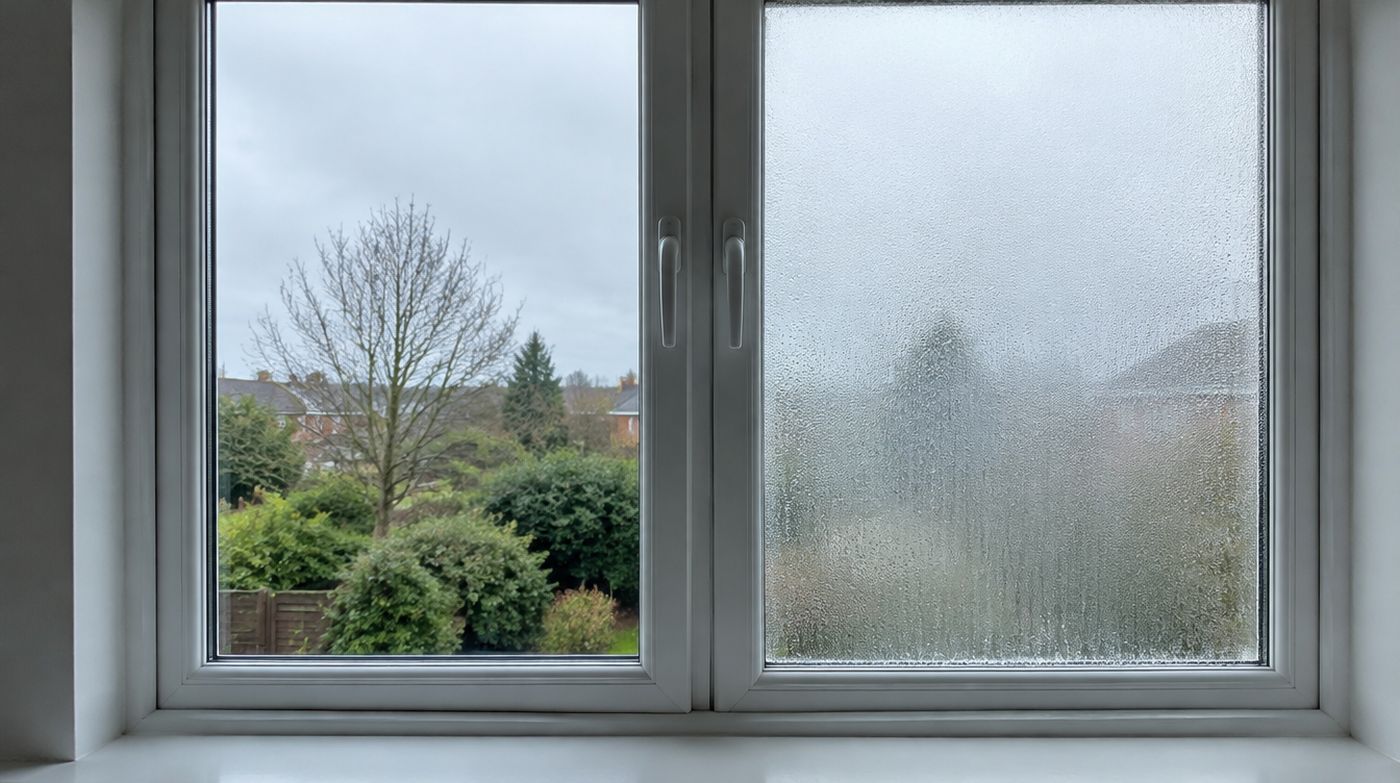
Replacement double glazing glass or a whole new window: how to decide
When a window mists up, the industry’s default answer is a new window. It is the bigger sale and it is the easier sale. In most London houses it is also the wrong answer, because the part that has failed is the sealed unit, and the sealed unit is a consumable. Replacement double glazing glass goes into the frame you already own, in well under an hour per window, and leaves your plaster, your sills and your decoration alone.
The honest version of the decision is this. The glass is a wearing part with a service life. The frame, the hardware and the seals are the window. If the window is sound, you buy glass. If the window is failing in ways glass cannot fix, you buy a window. Everything below is about telling those two situations apart before anybody quotes you.
We run a glass workshop in Wembley and we make the units ourselves, so we have a bias and you should know what it is: we would rather make you glass than sell you windows. That bias happens to line up with your money most of the time. Not always, and we will say so on survey when it does not.
A ten-minute walk-round that tells you whether the frame is worth keeping
You can do most of this assessment yourself before you phone anybody, and it is worth doing, because it changes the conversation you then have. Take a torch, a screwdriver and something to write on. Start outside.
Check the corners and the welds
On a PVCu frame, look at the mitred corner joints inside and out. A clean weld with a faint line is normal. A corner that has opened, so there is a dark gap or you can get a fingernail into the joint, means the frame has lost rigidity, and new glass does not cure that. On timber, press the bottom corners of the sash and the bottom rail of the outer frame with the screwdriver handle. If it gives or feels spongy, the joint is wet and decaying from the inside out.
Open it and look along the sash
Open the window fully and sight along the sash from the hinge side. A sash that has dropped so the lock no longer lines up is usually hinges or packing, and both are cheap repairs. A sash with a visible bow in the middle, or one where the glass has clearly shifted in the rebate, is a different matter: the frame has flexed, and anything you put in it goes in under stress.
Find the drainage and test it
Along the bottom of the outer frame there should be drainage slots, often behind small plastic caps. Poke them clear and pour a cup of water into the bottom of the open frame. It should run out within seconds. If it stands there, the drainage is blocked or was never cut, and that standing water is the most common reason a sealed unit fails early. Clearing it costs you nothing and it protects the next unit.
Press the gaskets, then work the lock
Run a finger round the rubber gaskets. Rubber that has gone hard and shiny and shrunk back from the corners is at the end of its life, but gaskets are a stocked extrusion on most window systems and sold by the metre. Then work the handle and watch the locking points. Grinding, having to lift the handle to engage, or a lock that only catches at one point, all mean hardware wear. That is a repair with parts, not a reason to replace a window.
Write down what you found. Three sound corners, clear drainage and a lock that works means you are buying replacement double glazing glass and nothing else. Open corners, soft timber, or a system nobody makes parts for any more, and the arithmetic changes.
What each route actually costs you in disruption
Price is not the only difference between the two routes, and for anyone living in the house it is often not the main one.
Replacement double glazing glass is a two-visit job and neither visit is invasive. Somebody measures, which takes a few minutes a window. The unit is made, and a fitter comes back, takes the beads off, lifts the old unit out, packs and beds the new one and puts the beads back. There is no scaffold on a job reached from inside, no dust sheet in every room, no plaster to make good, no external sealant line to renew, and the hole in your wall is open for minutes rather than hours. Your frames keep their paint, your sills keep their mastic, your trickle vents, handles and keys stay exactly as they are.
A whole window replacement is a building job. The frame comes out, which usually damages the internal plaster reveal and often the external pointing. You get a new frame, new internal and external sealant, frequently a new sill or sill extension, and almost always some making good and redecoration that you then pay a second trade to do. There is waste to load out onto a London street, most of a day with a hole in the wall, and on anything above the first floor the access question arrives: tower, scaffold, or hired platform.
For a landlord or a letting agent the practical difference is tenant access. Glass replacement needs two short appointments and can usually be worked around a tenant’s job. Frame replacement needs a full day of somebody being in, often more than one, and in a tenanted flat that is the part of the plan that fails.
When a window has genuinely had it
There are windows we survey and then tell people not to spend money on glass. Saying so costs us the sale and saves you paying twice inside two years.
Timber frames where the bottom rail or the cill has softened more than a couple of millimetres deep will not hold a new unit properly, because the unit sits on setting blocks and those blocks need solid timber beneath them. Get the joinery repaired first, or replace the window.
PVCu frames from the late eighties and early nineties are often a problem, and not because of the plastic. It is the glazing system. Some were built with no drained cavity at all, with the unit bedded solidly in silicone, which means the replacement sits in water from the day it goes in. Some used bead profiles that are long out of production, so if a bead snaps on removal there is nothing to replace it with. We check what system a frame is before quoting, and where we think beads will break we tell you beforehand rather than on fitting day.
Steel frames, usually Crittall and its imitators in 1930s suburban houses, will take glass but not much of it. The rebate often accepts only a thin unit, and a thin unit means a narrow cavity and modest thermal performance. It is still worth doing. It is not worth being sold a standard 28mm unit for, because it will not go in.
Finally, if more than about half the windows in a house have failed and the frames are all the same age and the same system, you are looking at a whole-house decision rather than a repair. Price both routes properly before you commit, and get the glass route priced by somebody who does not also sell windows.
What to challenge when a company quotes you for whole windows
If you asked about glass and came away with a quotation for windows, four questions move the conversation along quickly.
- Which part of this window has failed, and why can it not be reglazed?
- Is the glazing bead on this frame still available as a spare part?
- Does this price include making good the plaster, the external sealant and the redecoration, or is that mine to arrange?
- Who notifies this work under building regulations, and will I get the certificate?
That last one matters more than people realise. Replacing a complete window is notifiable replacement glazing work. It is either registered through a competent person scheme, which is what a FENSA registered installer does, or signed off by your local authority building control. Replacing the sealed unit inside an existing frame does not create the same obligation, though the unit itself still has to meet the thermal requirement that applies to replacement glazing under Approved Document L. Anybody who cannot answer the notification question clearly is not the firm you want doing building work.
Be wary, too, of being told a frame is out of specification with no specific defect pointed at. Out of fashion is not a defect. Neither is a frame being white when you would prefer anthracite, or having a slim bead when current frames have a chunky one. Those are reasons to replace a window if you want to, not reasons you need to.
What we look at when we survey a misted window
The survey is free and it takes around twenty minutes for a typical house. We measure every failed unit to the rebate rather than to the visible glass, identify the glazing system and the bead type, look for toughening marks on the existing panes, check whether the position is a critical location under Approved Document K, and test the drainage. You get a written fixed quotation listing each unit by room and size, with the make-up we propose for it.
Where a frame needs work before it is worth reglazing we put that in writing, including when the work belongs to another trade and we will not be doing it. We would rather lose a job than fit a good unit into a frame that is going to kill it inside five years.
We cover Greater London from the workshop at 6 Atlas Road in Wembley and we are strongest across the north, west and central boroughs. Hours are Monday to Friday, 8am to 5pm, and the number is 020 4634 6045. Glass is made to your sizes rather than pulled off a rack, which is why we quote after measuring rather than over the phone.
FAQ
Questions about replacement double glazing glass
Can you replace just the glass in a double glazed window?
Yes, in almost any double glazed window. The glass is a separate component held in by beads, and it can be taken out and replaced without disturbing the frame, the hardware or the decoration. The unit is measured, made to size, and fitted on a second visit, usually in under an hour. The exceptions are frames whose glazing beads are obsolete and likely to break on removal, timber frames that have rotted where the glass bears, and steel frames that will only accept a thin unit. A surveyor should identify which of those applies before quoting, not on fitting day.
Will new glass in an old frame still be energy efficient?
Usually it is a noticeable improvement, because a current unit uses a soft-coat low-emissivity pane, a warm-edge spacer and an argon fill, and a 1990s unit had none of those. Replacement glazing has to meet a thermal standard under Approved Document L, and a properly made unit does. What glass cannot fix is air leaking past a worn gasket or through a dropped sash, so if your complaint is draughts rather than mist, deal with the seals and hardware at the same time. Do not pay for triple glazing in a frame with a shallow rebate. It will not fit.
Do I need building regulations approval to replace the glass in a window?
Replacing the sealed unit inside an existing frame is a repair and does not need notifying in the way a whole window does. The unit still has to meet the thermal performance expected of replacement glazing, which a standard low-emissivity, argon-filled unit does comfortably. Replacing the complete window is notifiable: it is either registered by an installer belonging to a competent person scheme, such as a FENSA registered firm, or signed off by your local authority building control, and you should receive paperwork either way. If a company cannot tell you which route your job takes, ask before you sign anything.
Get a price for your replacement units
Tell us roughly how many windows have misted and we will give you a price. Several units on one visit works out cheaper per window.